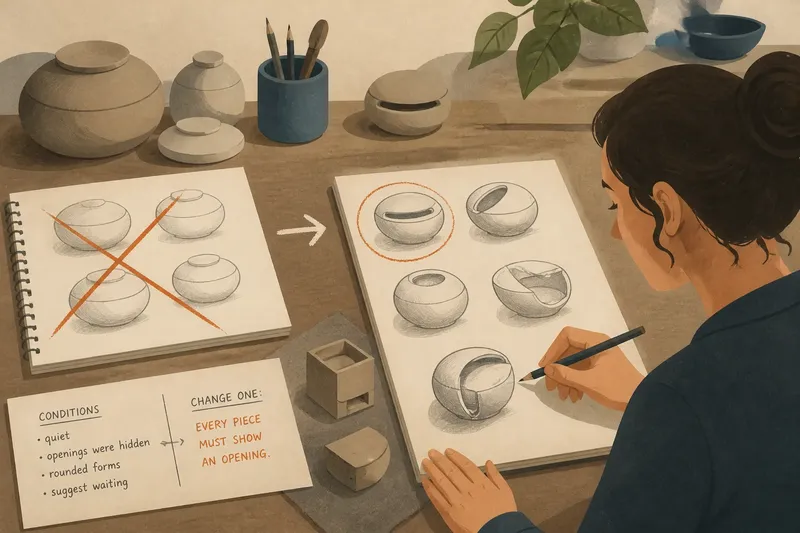
Open Question or Leading Question?
Open question or leading question: learn how each steers an idea, spot assumptions in your wording, and choose a prompt that keeps inquiry honest.
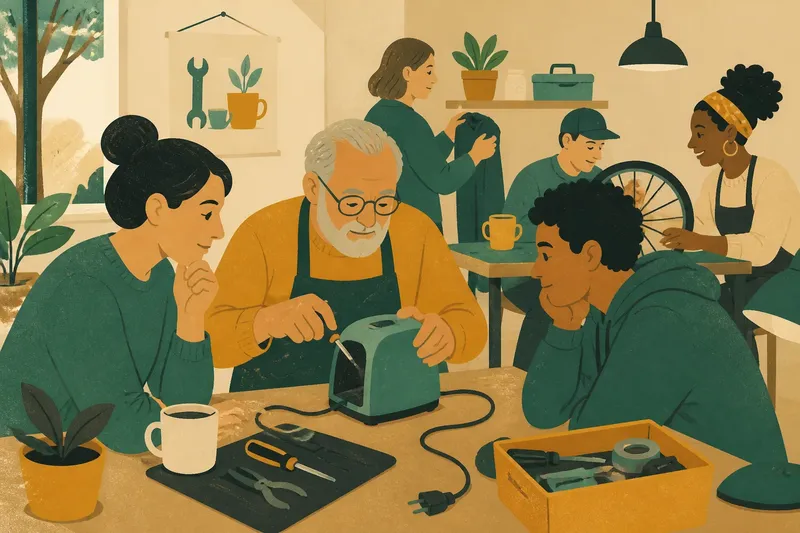
You are looking at a noticeboard covered with flyers, and one catches your eye: a hand-drawn sign for a neighborhood repair café. “Why do people care so much about fixing things?” seems to invite thought, but it already assumes that people care. “What happens at a repair café?” leaves more room. The difference between an open question and a leading question can quietly redirect an idea before you have had a chance to examine it.
Neither form is automatically useful or flawed. Open questions make space for answers you did not anticipate; leading questions put a particular interpretation within easy reach. The choice depends on what you need from the next thought: discovery, a focused comparison, or a deliberate challenge to an assumption.
Two kinds of direction
An open question does not settle what its answer should be. “What draws people to the repair café?” could lead to curiosity, convenience, social contact, concern about waste, or a reason you had not considered. The answerer chooses which parts of the subject matter.
A leading question contains a cue about the answer, often through its wording. “Why is the repair café such a welcoming place?” presumes that it is welcoming. So does “How does the café make people feel more connected?” The question may reflect a real possibility, but it has framed that possibility as established before the inquiry begins.
There is a useful distinction between a question that is focused and one that leads. “What kinds of repairs do visitors bring?” has a clear boundary, but does not assume what visitors bring. “Why do visitors bring so many broken lamps?” quietly assumes that broken lamps are common. Focus narrows the subject; leading language narrows the acceptable answer.
Questions can also lead through emotional tone rather than an explicit claim. “What makes the café feel like a bright spot in the neighborhood?” suggests approval, while “What makes it feel out of place?” suggests disapproval. That is not always a problem. It becomes one when the tone is mistaken for evidence or when other interpretations are excluded without notice.
What openness makes possible
Open questions are especially useful near the beginning of an inquiry, when you do not yet know what matters. They help a writer explore a subject, a designer understand a setting, or a reader test their first impression. “What is changing here?” leaves room for changes in routine, relationships, materials, or expectations.
They also help when you are talking with someone whose experience differs from yours. “What do you notice when you visit?” is less likely to prescribe a feeling than “Do you enjoy coming here?” The first gives the person more control over what they describe. In a reflective notebook, an open question can help separate observation from interpretation: “What did I actually see?” is more spacious than “Why was that person being rude?”
But openness is not the same as usefulness. “What is this about?” may be so broad that it offers no foothold. A question can be open while still naming a place, moment, object, or action. “What happens between the time a visitor arrives and the time a repair begins?” gives attention somewhere to land without dictating what the answer must be.
Open questions can also make a conversation tiring if every prompt asks for a wide-ranging account. Someone may not know where to start, or may give a general answer that does not help you think. A more bounded open question can make the task manageable: “Which part of the visit do people talk about afterward?” still allows several answers, but it points toward a particular slice of experience.
What leading questions can do
Leading questions have a place when you are testing a specific interpretation rather than trying to discover one from scratch. If you suspect that unclear signs make a room difficult to use, you might ask, “Could the sign’s wording be confusing first-time visitors?” That is a hypothesis in question form. It can be helpful as long as you keep it visibly provisional and make room for contrary evidence.
They can also help generate alternatives. Ask, “If the repair café feels welcoming, what might create that impression?” Then ask the reverse: “If someone found it intimidating, what might cause that?” These prompts do not establish either feeling as fact. They invite you to imagine different viewpoints and look for details that could support or complicate each one.
The risk comes when a leading question is used as if it were neutral. “Why do people avoid the café?” presumes avoidance; “What stops people from joining?” presumes an obstacle. Perhaps people are unaware of the café, prefer another activity, or have already tried it and no longer attend. A question with a built-in story can make that story feel confirmed simply because it was easy to answer.
Leading prompts may suit a person who has already gathered observations and wants to inspect a particular possibility. They are less suited to an early conversation in which the other person’s own terms matter, or to a situation where you are trying to notice what you do not yet understand.
A wording comparison
Consider the subject of a shared neighborhood garden. Each pair below shows how a small change in wording can shift the answer space.
- Open: “What do people use the garden for?” Leading: “How does the garden bring neighbors together?” The open version allows for gardening, walking through, resting, or meeting someone; the second assumes a social benefit.
- Open: “What changes during the week?” Leading: “Why is the garden neglected on weekdays?” The second labels the garden neglected before establishing what happens or why.
- Open: “What do visitors notice about the entrance?” Leading: “Why is the entrance so inviting?” The open version could reveal welcome, confusion, or no strong impression; the second directs attention toward a positive judgment.
Say you are writing about a quiet bench beside the garden path. Your first note reads, “People come here to escape the neighborhood noise.” That may be true, but it is an interpretation. You could reopen the inquiry with “What do people do when they sit here?” and record observable details, such as reading, watching the path, or speaking with a companion. Then “Could the bench offer a break from noise?” becomes a focused possibility to consider, not an answer hidden inside the original question.
Questions worth asking?
How can I spot a leading question?
Look for words that treat an unverified judgment as settled: “why,” “how,” or “what makes” can all do this when they follow an assumption. Ask whether a reasonable answer could challenge the premise; if the wording makes that difficult, revise the question.
Is a question starting with “why” always leading?
No. “Why did the visitor leave before the repair began?” can be open if the departure is known and the reason is not. “Why did the visitor lose interest in the repair?” leads because it assigns an attitude that may not have been observed.
When should I use a leading question?
Use one when you deliberately want to examine a named possibility, especially after you have gathered some observations. Mark it as a question to test, then pair it with a prompt that could reveal a different explanation.
How do I keep an open question from becoming vague?
Give it a concrete anchor: a place, object, moment, or action. “What happens at the garden?” is broad; “What do people do near the tool shed after watering?” offers a manageable point of entry without prescribing an answer.
Choose by purpose
Before writing a prompt, ask what you need next. If you are trying to discover unfamiliar aspects of a subject, choose an open question with a concrete anchor. If you are checking a specific interpretation, use a leading question consciously, and treat its premise as something to examine rather than a conclusion.
When the purpose is mixed, move from open to focused. Start with “What do visitors notice about the entrance?” If the answers suggest that the sign matters, follow with “Could its wording make the entrance seem intended for regulars?” The first gathers material; the second tests one possible reading. You need not pretend that both questions do the same work.
It is not worth polishing a prompt until it sounds perfectly neutral. A question can be useful without being free of perspective, and an awkwardly cautious sentence may make the exchange harder to follow. Aim instead to make the perspective visible enough that you can question it, too.
For a quick check, underline any claim concealed in your wording, then ask what answer would make you reconsider it. If you cannot imagine one, return to an open question. That small habit makes the choice between an open question and a leading question less about sounding impartial and more about keeping the inquiry answerable to what you actually notice.